Please post in the comments any questions you may have for the Water Dept. concerning Garden River's water supply, and we will ask them for you and post the interview!
Tuesday, 14 June 2011
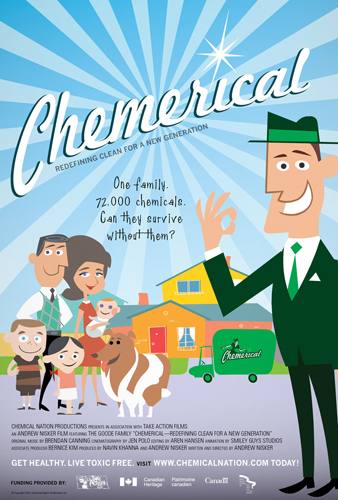
Chemerical: Watch this video!
Here's some information from our past booklets on Cleaning Products:
Natural Cleaners VS. Chemical Cleaners
Modern cleaning products contain dangerous chemicals.Chemicals in these cleaners have the ability to cause various illnesses and health concerns such as: cancer, respiratory problems, reproductive abnormalities, and allergic reactions, among other things. The effects on the environment and wildlife are also lengthy.
DID YOU KNOW?
The chemicals found in these cleaners are 3 times more likely to cause cancer than air pollutants.
If you can’t pronounce it, then why use it?
ALKYL DIMETHYLBENZYL AMMONIUM CHLORIDE is the first ingredient on no-name all-purpose cleaner that can be purchased at Rome
WHY GO GREEN?
By switching from chemical cleaners to natural cleaners you are protecting yourself and your family from harmful chemicals, keeping the environment healthy from chemical pollution, and saving money. You will be saving approximately $3.70 if you were to switch to natural cleaning products.
Why spend $4.00 on one 32 oz. bottle of chemical cleaner when you can spend 30 cents on one 32 oz. bottle of natural cleaner?
Living Green!
All you will need is...
• Baking soda
• Borax
• Cornstarch
• Isopropyl alcohol or vodka
• Lemon juice
• Hydrogen peroxide
• Vinegar
• Washing soda
• Salt
CHEMICALS FOUND IN YOUR HOME THAT SHOULD NOT BE MIXED TOGETHER...
Bleach with Vinegar or Bleach with Ammonia
Don't mix chlorine bleach with any acid. Toxic chlorine vapor is produced. Read ingredients list before mixing anything.
Different Brands of One Type of Product
Don't mix different cleaners together. They may react violently, produce toxins, or become ineffective. HOWEVER, it is OK to mix store bought dish soap with natural cleaning products like vinegar and borax.
Highly Alkaline Products with Highly Acidic Products
Acids and bases (alkalis) can react violently. Acids and bases are caustic and may cause chemical burns. NOTE: Washing soda and borax are biodegradable and better for the environment but both are alkali materials and should be handled using rubber gloves, should not be inhaled, and should be kept away from children.
Here are some recipes for Natural Cleaners that are cheap and easy:
Dish Detergent for Washers
1cup Washing Soda
1 cup Borax
OR
1 cup Baking Soda
1 cup Borax
Mix thoroughly and store in a plastic container, use approximately 2 tbsp per load.
Use vinegar in the rinse to avoid residue on dishes
Laundry Soap
-a bar of ivory soap (or other dye free kind)
-1 cup of borax
-½ cup washing soda
-grate soap and dissolve all ingredients in a litre of water. Add another litre of water, store in a covered pail, use ¼ cup per load.
Carpet stains
- mix equal parts white vinegar and water in a spray bottle
- spray directly on stain (let sit for several minutes)
- clean with a brush or sponge using warm soapy water
For fresh grease spots, sprinkle corn starch on spot (15 - 30 minutes) then vacuum.
For a heavy duty carpet cleaner, mix 1/4 cup each of salt, borax and vinegar. Rub paste into carpet (2-4 hours) then vacuum.
All Purpose Cleaners
- add 4 tbsp of vinegar 2 tsp borax and 1 cup hot water
-add 1 tsp castile soap or “green” dish soap, a bit of lemon juice for scent
OR
- combine 1 tsp borax, 1 tsp baking soda, 2tbsp lemon juice and 250 ml of hot water
Cleaning your microwave
mix 30 ml of baking soda or lemon juice and 250 ml water in a microwave-safe bowl
microwave until the liquid boils and condensation builds up inside the microwave
wipe down.
Toilet Bowl Cleaner
-sprinkle in ¼ cup baking soda
-add 1 cup vinegar into toilet (let sit 5 mins)
-scrub with brush
Does living green seem hopeless or pointless to you?
What does being "green" even mean?
Excerpts from this article reflect how I felt when I first started researching how to contribute to the health of the Earth. It can be overwhelming when there is so much info out there, and so little money in your pocket or time in your day to access the things others are doing to be "green".
"....."Environmentalist"
A word that conjures up images of sandal-wearing off-the-gridders who've sworn off T.V's and cars, and who can't walk past a tree without hugging it.
Today, "going green" has a new set of stereotypes. To be green you must have green — money. Can't convert your home to solar power or grey water recycling? Then why bother!
In the face of something as serious as climate change, can small steps like making laundry soap really make a difference?
Do small steps detract from the big picture, which can be overwhelming and depressing?
Or does going "green" one laundry load at a time give us the perspective we need and a sense of the responsibility to act?..."
And I guess the only answer is, it depends on you, and how you feel about it.
As a student with 1 child and a husband who works, I buy as many organic products from the grocery store as I can, as well as recycled toilet paper. I unplug as many things as I can when I am not using them. I try to remember to bring a mug to work, and reusable bags to the grocery store (but I often forget). Am I making a difference in the world? Who really knows the answer to that?
But I feel like I am, and I also feel like I will be instilling something important in my son, which is to care, and to make as much effort as you can, even if it is very modest and miniscule.
Excerpts from this article reflect how I felt when I first started researching how to contribute to the health of the Earth. It can be overwhelming when there is so much info out there, and so little money in your pocket or time in your day to access the things others are doing to be "green".
"....."Environmentalist"
A word that conjures up images of sandal-wearing off-the-gridders who've sworn off T.V's and cars, and who can't walk past a tree without hugging it.
Today, "going green" has a new set of stereotypes. To be green you must have green — money. Can't convert your home to solar power or grey water recycling? Then why bother!
In the face of something as serious as climate change, can small steps like making laundry soap really make a difference?
Do small steps detract from the big picture, which can be overwhelming and depressing?
Or does going "green" one laundry load at a time give us the perspective we need and a sense of the responsibility to act?..."
And I guess the only answer is, it depends on you, and how you feel about it.
As a student with 1 child and a husband who works, I buy as many organic products from the grocery store as I can, as well as recycled toilet paper. I unplug as many things as I can when I am not using them. I try to remember to bring a mug to work, and reusable bags to the grocery store (but I often forget). Am I making a difference in the world? Who really knows the answer to that?
But I feel like I am, and I also feel like I will be instilling something important in my son, which is to care, and to make as much effort as you can, even if it is very modest and miniscule.
Sun Protection: What You Should Know
We all need a little sun! It makes us feel good, and is our primary source of the essential Vitamin D, which helps our bones absorb calcium. But too much sun can be harmful.
How much is too much?
UVA and UVB rays in excess cause melanoma, a form of cancer. A tan is a sign that your body is trying to defend itself from the harmful rays using melanin, a pigment that absorbs the rays before they can cause damage. But a tan does not offer further protection from the sun.
Limiting the amount of time you spend in the sun is also essential. Avoid long periods in the sun between 10 a.m. and 4 p.m. when the suns rays are at their strongest. After 20 minutes in the sun, go inside or in the shade and take a 15 minute break, and be sure to stay hydrated.
The Truth About Sunscreens
The best suncreen is a shirt and a hat!
The U.S. Environmental Working Group (EWG) tested sunscreens and found that most are filled with chemicals hazardous to your health and dangerous to the environment, and many do a poor job of protecting your skin from damaging UV rays. Choose safer brands listed in The Environmental Working Group's 2011 Sunscreen Report here
Read the ingredients list on the back of the bottle before you buy a sunscreen!

Go here for 9 surprising truths about sunscreen and find out why its worth your while to become familiar with the ingredients of the sunscreen you may already have bought!
More info also here: Queen of Green Blog
How much is too much?
UVA and UVB rays in excess cause melanoma, a form of cancer. A tan is a sign that your body is trying to defend itself from the harmful rays using melanin, a pigment that absorbs the rays before they can cause damage. But a tan does not offer further protection from the sun.
Limiting the amount of time you spend in the sun is also essential. Avoid long periods in the sun between 10 a.m. and 4 p.m. when the suns rays are at their strongest. After 20 minutes in the sun, go inside or in the shade and take a 15 minute break, and be sure to stay hydrated.
The Truth About Sunscreens
The best suncreen is a shirt and a hat!
The U.S. Environmental Working Group (EWG) tested sunscreens and found that most are filled with chemicals hazardous to your health and dangerous to the environment, and many do a poor job of protecting your skin from damaging UV rays. Choose safer brands listed in The Environmental Working Group's 2011 Sunscreen Report here
Read the ingredients list on the back of the bottle before you buy a sunscreen!

Go here for 9 surprising truths about sunscreen and find out why its worth your while to become familiar with the ingredients of the sunscreen you may already have bought!
More info also here: Queen of Green Blog
Monday, 13 June 2011
Please Check Back Soon For More Updated Posts!
Hello Garden River!
Your Green Plan Students this year have started a blog so we can update you on information instantly! Please bookmark and check back often! Thanks!
We will be testing your swimming sites soon and posting health and green living information soon!
Your Green Plan Students this year have started a blog so we can update you on information instantly! Please bookmark and check back often! Thanks!
We will be testing your swimming sites soon and posting health and green living information soon!
Information from Past Booklets:
DO YOU KNOW WHERE YOUR WATER COMES FROM?
Where Does Garden River’s Water Come From?
Water is an essential part of life, but you may have never thought about where your water comes from.
Our water is drawn from two wells using large water pumps. The wells are located behind the Water Department building (beside Anishinabek Credit Union). One well is 550 feet deep and the other is 600 feet deep. They were dug in the 1950’s.
Why this location?
Ecological tests were completed by the government to find a large source of groundwater called an aquifer. An aquifer is an underground layer of water- bearing permeable rock (such as gravel, silt, sand or clay) from which groundwater can be extracted using a well. Garden River, Rankin, and Sault Ste. Marie draw water from the same aquifer, so it is quite large. The best place for Garden River to tap into the aquifer was located where the wells now stand.
How does water get to my taps?
First, the water is drawn from the wells using large pumps. Then, it is sent through a monitoring system at the Water Department building where it is treated with chlorine (a disinfectant), and tested regularly by workers, according to provincial and federal standards. It is then sent through pipes to the rest of the reserve.
Everything from chemicals in garbage at the landfill to cleaning products we use in our homes eventually gets washed into our groundwater and therefore, into the water we drink. This is one of the many reasons why this community should live “green” by developing a lasting recycling program, use natural cleaners, and keep hazardous materials out of the landfill
Bottled Water:
Media has made us think that bottled water is safer than tap water. A study by the Natural Resources Defence Council (NRDC) found plenty of bacteria and chemicals in bottled water. Yet there are currently no regulations in place for bottled water. Although there are no regulations on bottled water there are many safety regulations on tap water. If chlorine taste is a problem at your taps, purchase a Brita tap or jug filter. Using Brita filters will also reduce the amount of plastic water bottles that go into the landfill or have to be recycled. Over time, plastic breaks down and releases toxic chemicals into the water bottle. Don’t reuse plastic bottles made for single use. They are breeding grounds for bacteria and will also start to break down quickly, releasing chemicals. If your bottled water smells like plastic, do not drink it When using a reusable water bottle, purchase stainless steel. This will protect your water from leaking chemicals, and the bottle will last a lifetime.
The Effects of the Garden River First Nation Landfill Site on Air, Soil, and Groundwater Quality
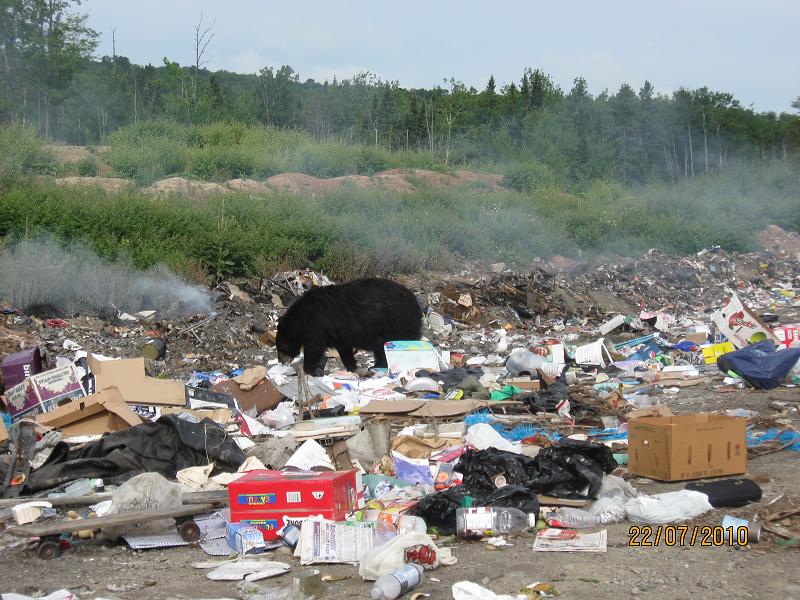
The Garden River First Nation landfill poses a great threat to local water, air, and soil quality, and therefore our health.
The operation of this facility does not meet regulatory standards as directed by the CEPA (Canadian Environmental Protection Act), OWRA (Ontario Water Resources Act), and Ministry of the Environment.
By the year 2000, there was enough scientific evidence to conclude that burning household garbage was a significant contributor to the North American emissions of dioxin, a potent endocrine (hormone) disruptor, and a cause of cancer.
Do you want your kids swimming in nearby rivers where runoff from the landfill is entering it everyday? Harmful runoff including acid from thrown away batteries, and toxic chemicals from burnt plastics are entering our waterways everyday from our own landfill.
Some ways that we can achieve this would be to establish a more liable waste management facility and create a recycling program.
 Health Canada had completed an inspection in 2009 of our landfill site and indicated to Chief and Council that they attend to the recommendations listed. Here are some of the recommendations made by Health Canada (2009):
- Hazardous waste disposal should be prohibited at this site – a sign should be posted to inform the public.
- More frequent soil cover and compaction should be provided over refuse.
- Signage should be provided to indicate disposal areas and segregated waste (e.g., appliances, metals, tins, etc.)
- Signage should be posted to prohibit burning of refuse. Burning refuse creates toxic emissions and also attracts wildlife, such as bears.
- Litter control should be improved. Litter blown off-site should be cleaned up.
- The pile of tires should be removed by a recycling company.
- Consideration should be given to site fencing, gates, and providing a daily site operator during hours of operation.
It is our goal as the green plan, to inform the community of the detrimental effects of our landfill
site and how we, as a community, can create a constructive waste management plan that will allow us to make a positive ecological footprint across Canada.
Where Does Garden River’s Water Come From?
Water is an essential part of life, but you may have never thought about where your water comes from.
Our water is drawn from two wells using large water pumps. The wells are located behind the Water Department building (beside Anishinabek Credit Union). One well is 550 feet deep and the other is 600 feet deep. They were dug in the 1950’s.
Why this location?
Ecological tests were completed by the government to find a large source of groundwater called an aquifer. An aquifer is an underground layer of water- bearing permeable rock (such as gravel, silt, sand or clay) from which groundwater can be extracted using a well. Garden River, Rankin, and Sault Ste. Marie draw water from the same aquifer, so it is quite large. The best place for Garden River to tap into the aquifer was located where the wells now stand.
How does water get to my taps?
First, the water is drawn from the wells using large pumps. Then, it is sent through a monitoring system at the Water Department building where it is treated with chlorine (a disinfectant), and tested regularly by workers, according to provincial and federal standards. It is then sent through pipes to the rest of the reserve.
Everything from chemicals in garbage at the landfill to cleaning products we use in our homes eventually gets washed into our groundwater and therefore, into the water we drink. This is one of the many reasons why this community should live “green” by developing a lasting recycling program, use natural cleaners, and keep hazardous materials out of the landfill
Bottled Water:
Media has made us think that bottled water is safer than tap water. A study by the Natural Resources Defence Council (NRDC) found plenty of bacteria and chemicals in bottled water. Yet there are currently no regulations in place for bottled water. Although there are no regulations on bottled water there are many safety regulations on tap water. If chlorine taste is a problem at your taps, purchase a Brita tap or jug filter. Using Brita filters will also reduce the amount of plastic water bottles that go into the landfill or have to be recycled. Over time, plastic breaks down and releases toxic chemicals into the water bottle. Don’t reuse plastic bottles made for single use. They are breeding grounds for bacteria and will also start to break down quickly, releasing chemicals. If your bottled water smells like plastic, do not drink it When using a reusable water bottle, purchase stainless steel. This will protect your water from leaking chemicals, and the bottle will last a lifetime.
The Effects of the Garden River First Nation Landfill Site on Air, Soil, and Groundwater Quality
The Garden River First Nation landfill poses a great threat to local water, air, and soil quality, and therefore our health.
The operation of this facility does not meet regulatory standards as directed by the CEPA (Canadian Environmental Protection Act), OWRA (Ontario Water Resources Act), and Ministry of the Environment.
By the year 2000, there was enough scientific evidence to conclude that burning household garbage was a significant contributor to the North American emissions of dioxin, a potent endocrine (hormone) disruptor, and a cause of cancer.
We need to improve how we use our landfill to have a safer and cleaner community
Do you want your kids swimming in nearby rivers where runoff from the landfill is entering it everyday? Harmful runoff including acid from thrown away batteries, and toxic chemicals from burnt plastics are entering our waterways everyday from our own landfill.
Some ways that we can achieve this would be to establish a more liable waste management facility and create a recycling program.
- Hazardous waste disposal should be prohibited at this site – a sign should be posted to inform the public.
- More frequent soil cover and compaction should be provided over refuse.
- Signage should be provided to indicate disposal areas and segregated waste (e.g., appliances, metals, tins, etc.)
- Signage should be posted to prohibit burning of refuse. Burning refuse creates toxic emissions and also attracts wildlife, such as bears.
- Litter control should be improved. Litter blown off-site should be cleaned up.
- The pile of tires should be removed by a recycling company.
- Consideration should be given to site fencing, gates, and providing a daily site operator during hours of operation.
It is our goal as the green plan, to inform the community of the detrimental effects of our landfill
site and how we, as a community, can create a constructive waste management plan that will allow us to make a positive ecological footprint across Canada.
Subscribe to:
Posts (Atom)