Total Pageviews

Wednesday, 27 July 2011

Get rid of standing water in your yards!

From the Sault Star Online:

A mosquito has tested positive for West Nile Virus in Sault Ste. Marie.
The insect was caught in a trap last week, said public health inspector Heidi Pittman of Algoma Public Health.
It's the first such confirmation of an insect having the disease in Algoma District since 2005.
"The virus could be present even in all the previous years," said Pittman.
"It didn't end up in the traps so it didn't get identified."
The health unit sprays many concrete electrical vaults in the city with a larvicide twice annually.
When the first spraying was done last week, a "higher than normal" amount of larvae was found, said Pittman.
West Nile Virus is transmitted to humans by the bite of an infected mosquito. There is no cure.
Sources of standing water, such as old tires, unused containers and wading pools, should be removed from residential properties.

Monday, 25 July 2011

What is Precycling?

Sure, recycling is good for the environment in one way, but in others it adds to carbon emissions because it takes energy to recycle, and most recycling plants don't use renewable energy (although many are starting to).

So what is another way, on top of recycling, that can help keep unnecessary garbage out of our landfill?

Precycling is the idea of watching what you buy based on how much waste it's going to create.

A few examples of Precycling:

  • Buying in bulk to reduce packaging
  • Purchasing things with little to no packaging (such as when buying used)
  • Only purchasing that which you are sure your local facility accepts (for instance, our facility will trash any plastics numbered 3-7, so I try to avoid those whenever possible)
  • Choosing quality items that will have a longer life span (rather than something inexpensive yet poorly made and quickly needing replacing)
  • Supporting companies who print on or package with recycled materials
  • Choosing reusable over disposable items
  • Statistics

    Approx. 250,000 plastic water bottles are thrown out every hour.
  • Planning ahead by bringing your own bags (for produce, dried bulk goods, check-out, etc), napkins, utensils, coffee mugs, etc.
  • Making your own yogurt or bread, instead of buying packaged options
  • Wrap gifts with other gifts: a book wrapped within a shirt and a belt as a bow.
  • Avoid the purchase of things you don't really need or that do not serve an important purpose in your life. Surround yourself with inspirational and useful items, rather than more "stuff".
Precycling is the first step in reducing waste, recyclable or not. Keep it in mind when shopping for groceries or gifts. And allow the reduction in waste to make space within your personal life, as well. Because reducing the waste coming and going from our home simplifies our life and reduces the clutter in our own minds as well.

From here

Tuesday, 19 July 2011

The 153 best sunscreens

I know not everyone can order things online, but I find more and more that I have been compelled to order soaps and other things online that I have done research on and I know are safe for my family, especially my toddler. If you do a little reading on the ingredients on the back of most of the things in your bathroom you use on your skin every day, it can be a little scary.

I order soap from this company Druide as they list all of their ingredients and their process for making soap.
This company is also Canadian and Certified Organic under Canadian Standards:   http://www.greenbeaver.com/

A few organic brands of sunscreen may be available in stores like Country Way on Brock Street, but unfortunately most of these are probably only available online.

Here is a list of the 153 best sunscreens to buy in the United States under United States Standards:
153 Best Sunscreens : Safest for you and your kids

You can go to EWG's Cosmetic Database and search any of the sunscreens on this list and find out the pros and cons of each and where to buy them if you like what they have to offer:

EWG's Cosmetic Database

One product that is for children and has a rating of #1 (zero is the best rating you can get from EWG) is Aveeno's Sun Natural Protection Baby SPF 50 Stick, which is probably more widely available than most other products on this list. Its available online at Amazon.com

From this list, I like the stats and ratings on the following products because they comply with The Compact for Safe Cosmetics and their sunscreens have a rating of 1 or better:
http://www.badgerbalm.com/  
http://www.californiababy.com/   
http://www.supergoop.com/  
http://elementalherbs.com/   
http://luvalla.com/
http://mvorganics.com/
http://www.mexitan.com/ 
http://www.poofscloset.com/servlet/StoreFront 
http://www.purpleprairie.com/
http://www.suntegrityskincare.com/Welcome.html 
http://thinkbabybottles.3dcartstores.com/thinkbaby-Safe-Sunscreen_c_21.html
http://www.trukid.com/ 
http://www.organicevolution.ca/uv-natural/ 


Monday, 18 July 2011

Honouring the Water Indigenous Water Forum

This week the Green Plan students are at the 4-day water conference being held in Sault Ste. Marie. It is a great chance to learn about our most important resource that is quickly becoming endangered. You can view a live feed of it every day from 8:30 to around 5pm here: Nation Talk

Thursday, 14 July 2011

Why Everyone Should Grow Something

Everyone should grow some of their own vegetables because:


It's cheaper

It's healthier for you and your family because its pesticide free. Most of us today have lost someone before their time. Disease is no longer a rarity.

You don't have to leave your yard (or house- if you grow indoors) to get it.

You know exactly where it came from.

 Your vegetables will be more nutrient rich because they didn't sit in a truck or store for weeks before you ate them.


 They will taste better.

Gardening is proven to be therapeutic and gives you a sense of accomplishment.

It is educational for your kids.

You can share with family and friends.

It's not as complicated or time consuming as you think.

Thursday, 7 July 2011

Composting:UPDATED: A useful way to recycle and reduce your waste output

"Composting" is nature's way of recycling organic materials that many people harness to reduce their output of waste and make their own nutrient rich soil for gardening, thus saving money and helping the environment.

Microorganisms like bacteria and fungi found outside on the ground feed on organic materials such as dead plants and process them through digestion into premium quality soil components. The best part is, they do it for free!

It is estimated that about 50% of what ends up in plastic bags at the landfill could have been composted! That's a lot of plastic bags!

How to Compost:

1.Pick a sunny spot in your yard.


2.Turn the soil there with a rake or shovel.


This I didn't do, and opted to add a bag of $1.99 soil instead. 


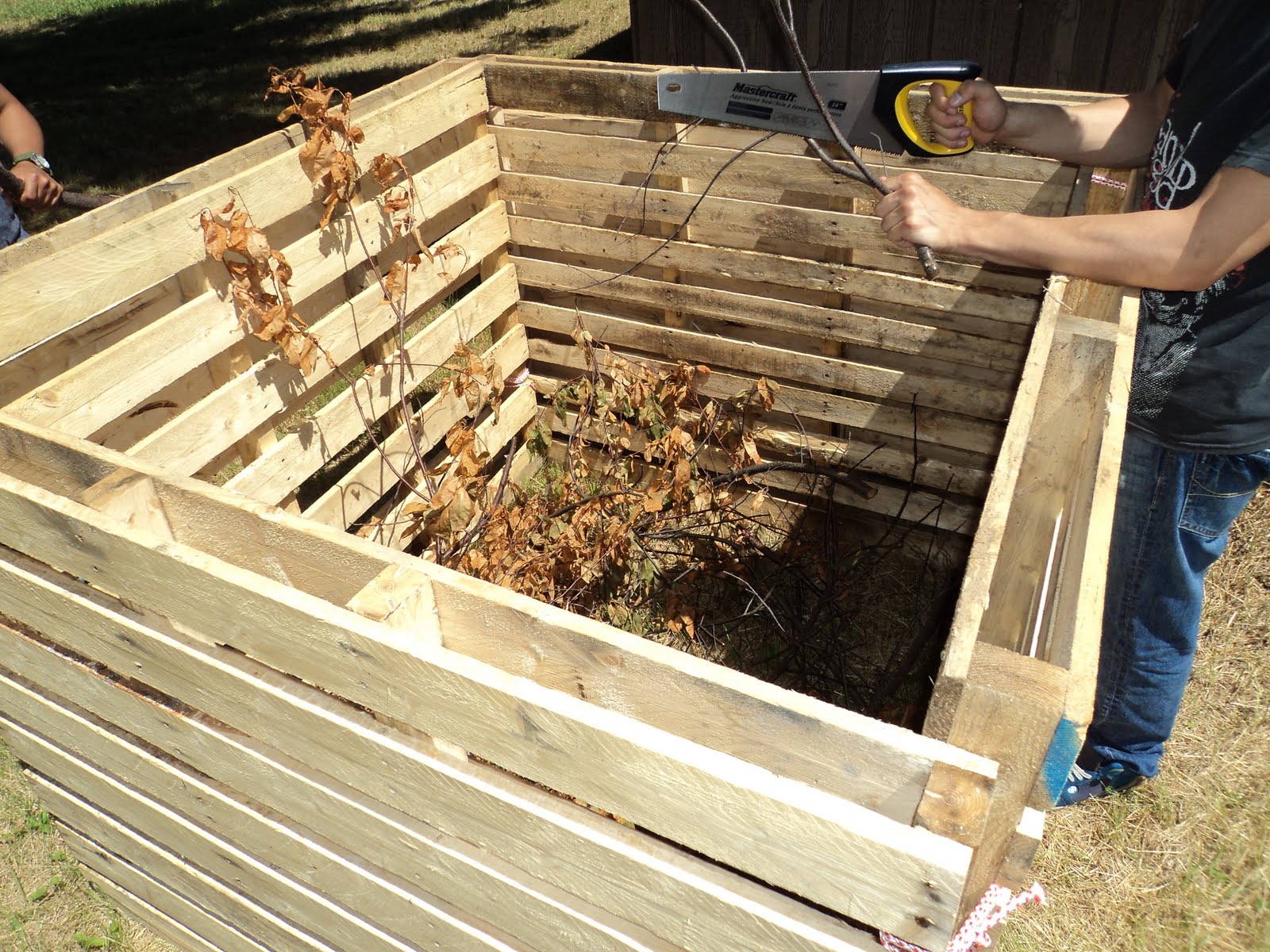
3. Make or buy a compost bin. ( Wooden box, pallets wired together, old fencing, chicken wire and wooden posts, or plastic and metal bins found in stores).


We used 4 free pallets we got from my uncle's work (there are many places in town that just throw them away), some rope for 5 dollars, and a bag of soil to get the process started.


 4. Place the bin on top of your turned soil in your sunny spot.


5. Place a layer of small branches in the bottom  -  this will allow for air movement and drainage

6. If you want, add a bag of bought soil to help the process along faster (not absolutely necessary)

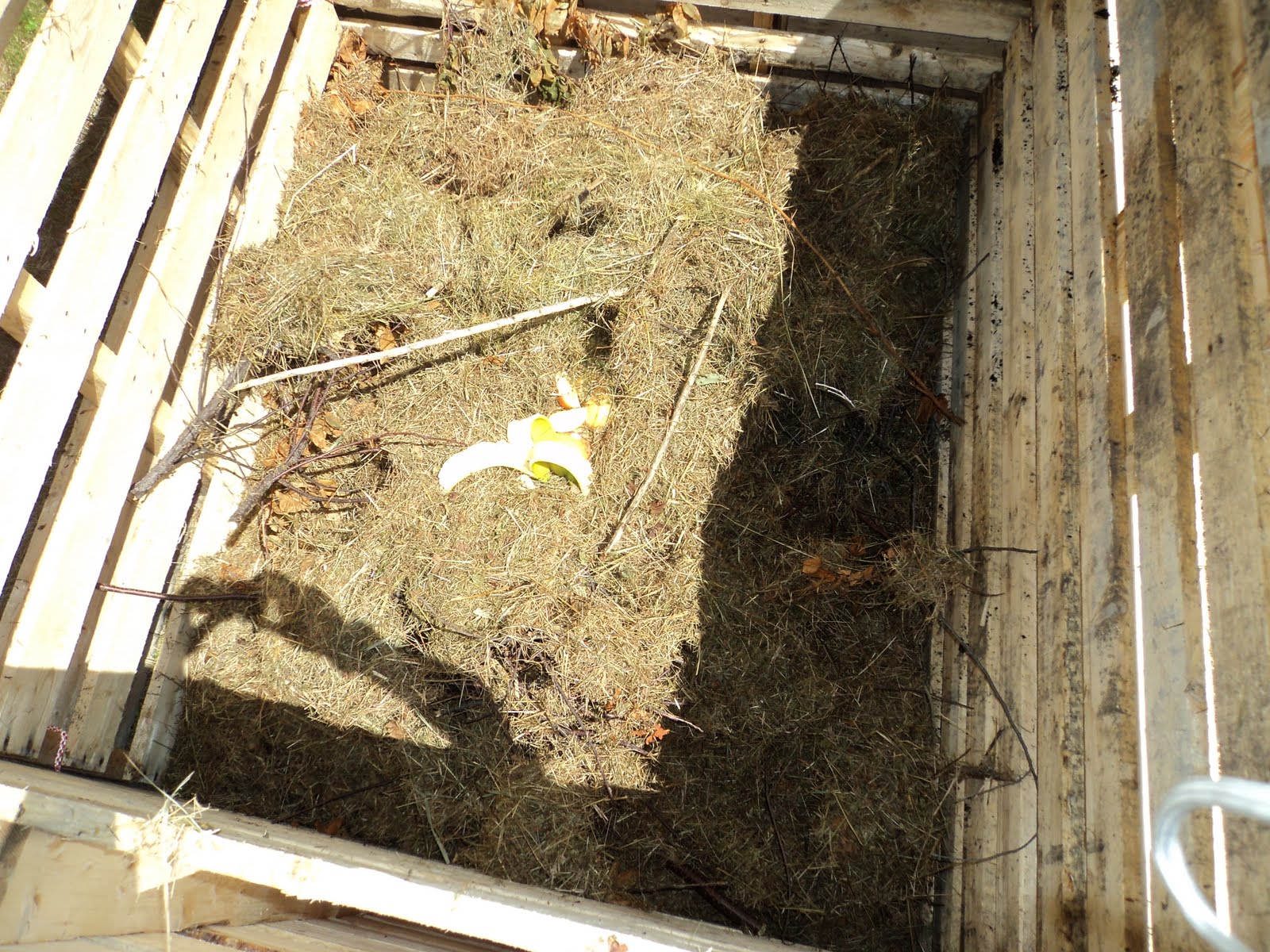
We added grass clippings from after mowing my lawn:


7. For the best and speediest process, alternate between wet and dry layers of material, such as a layer of fruit cores and scraps on top of a layer of leaf litter or newspaper.

We added some old fruit from my house and a peeling from a freshly eaten banana.


What can and can't be composted?

Do compost:
  • Fruit and vegetable scraps (even rotten)
  • Egg shells
  • Fresh grass clippings
  • Fresh weed clippings
  • Dry leaves
  • Straw/hay
  • Sawdust
  • Coffee grounds
    (including filters)
  • Tea leaves (including bags)
  • Napkins
  • Paper
    (recycling is recommended)
  • Pasta
  • Bread
  • Rice
  • Peanut shells
  • Fruit pits
  • Natural fibres (cotton, linen, wool, untreated leather…
Don't compost:

  • Meat and Fish
  • Oil (fat)
  • Bones
  • Dairy products
  • Rhubarb leaves (some sources say it is ok because the oxalic acid, which is toxic to kidneys, is neutralized as it decomposes)
  • Weeds that have gone to seed or with persistent root systems
  • Treated grass
  • Diseased plants or leaves
  • Wood ashes (highly alkaline, will make soil useless for growing plants)
  • BBQ briquettes
  • Animal or human excrements(can contain pathogens)
  • Vacuum dust (unless your home uses all natural cleaning products)
  • Materials contaminated by pesticides or other dangerous products (ex. : treated wood)
  • Large quantities of waterlogged material
Maintenance: Turn your compost once a week with a shovel or other gardening tool. Maintain an even mixture of wet and dry materials.

It can take between 2 months and 2 years to break down materials, depending on temperature and what is added. 

This post will be updated with images from my own first time composting efforts.

Wednesday, 6 July 2011

Green Plan Students Water Sampling

This year we are testing for E. coli at the most common swimming sites including Engine Point, Ojibway Park, Big Bend, Charles Point,  and Bell's Point. So far the water is still quite cold and the E. coli levels are very very low!

Happy swimming!


 Here is Daeson at Big Bend


Here is Cole and Deb at Big Bend


What is E. coli and why do we test for it?

E. coli is a naturally occurring bacteria that lives in the digestive tract of warm blooded animals, including humans, and as such, serves as an indicator of possible bacteria pathogen contamination. It could indicate pollution from sewage and waste water, and the potential that other pathogens may also be present.  Only some strains of E. coli are actually dangerous.

What can high levels of E. coli cause if ingested?:

Gastrointestinal infection symptoms such as diarrhea, vomiting, exhaustion.
Urinary tract infections
 
Sources of E. coli in swimming water:

Illegal waste dumping, septic systems that have overflowed, storms can cause waste water treatment plants to overflow into surrounding water systems, animal waste (such as watefowl) and agricultural runoff.

After a rainfall, E. coli levels will be elevated because of water runoff and the fact that E.coli is a natural bacteria. E. coli levels will only become dangerously high if there is an excess due to the above sources.

For example: So far our levels have been under 30 MPN, and in order to be able to cause illness, levels have to be above 200 MPN. In 3 years of water sampling, the highest number the Green Plan has found was 60, and this was after a heavy rainfall.